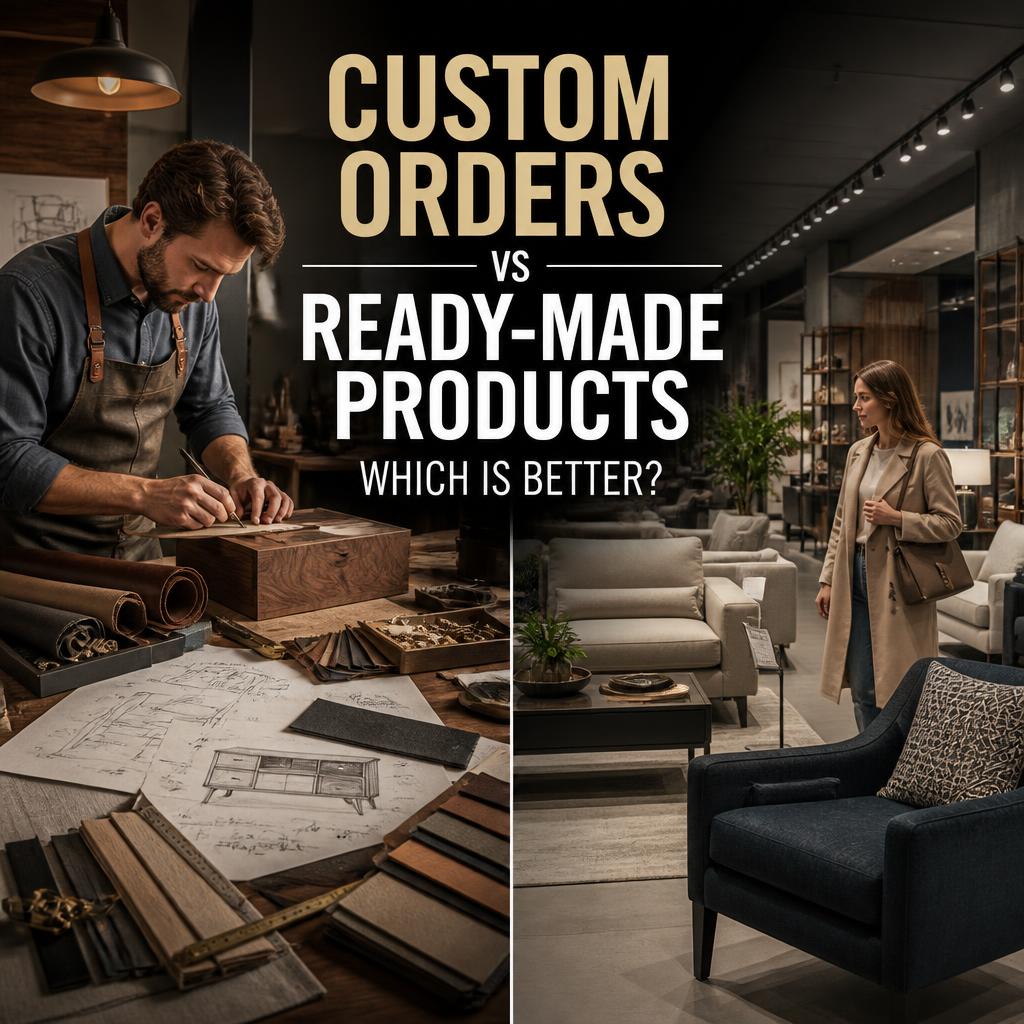
Custom Orders vs Ready-Made Products: Which Is Better? It is a question many shoppers face when buying furniture, clothing, gifts, accessories, décor, or other personal items. One option gives you something created around your preferences, while the other offers convenience, predictable pricing, and immediate availability. Both can make sense, but the better choice depends on what you actually need. – lalunafloralstudio.com
Instead of simply asking which option is superior, it helps to look at cost, quality, customization, waiting time, purpose, and long-term value. Once those factors are clear, choosing between custom-made and ready-made products becomes much easier.
What Are Custom Orders?
A custom order is a product made according to specifications provided by the customer. Rather than selecting an item exactly as it appears on a shelf or website, you can usually choose certain details before production begins.
Depending on the seller and product, customization might include dimensions, materials, colors, finishes, patterns, engraving, or design features. Some businesses provide semi-custom options, while craftspeople and specialized manufacturers may build an item almost entirely from scratch.
This approach is especially useful when standard products simply do not fit the intended space, style, or purpose.
Who Usually Benefits From Custom-Made Products?
Custom products work particularly well for people with specific requirements. A homeowner furnishing an unusually shaped room, for example, may struggle to find a standard cabinet with the right measurements. Likewise, someone buying an anniversary gift might prefer personalized engraving over a generic item.
Businesses can also benefit from custom orders when they need branded packaging, uniforms, signage, displays, or promotional merchandise.
In short, customization makes the most sense when personal relevance or precise functionality matters more than immediate availability.
What Are Ready-Made Products?
Ready-made products are manufactured in advance and sold in standardized designs, sizes, or configurations. They are the items you normally see sitting on store shelves, displayed in showrooms, or marked as “in stock” online.
Their biggest strength is simplicity. You find something you like, check whether the specifications work, pay for it, and take it home or arrange delivery.
Modern manufacturing often uses standardization to produce identical products efficiently. This process can reduce production costs while making popular items widely accessible.
Why Ready-Made Products Remain Popular
Convenience plays a major role. When you suddenly need a desk, backpack, jacket, or birthday gift, waiting several weeks for production may not be realistic.
Ready-made goods also make comparison shopping straightforward. You can evaluate several models, read reviews, compare prices, inspect photographs, and sometimes see the actual item before spending your money.
That level of predictability appeals to shoppers who want a simple purchase without making dozens of small design decisions.
Custom Orders vs Ready-Made Products: The Main Differences
Although both options ultimately serve the same purpose—giving you a usable product—the buying experience can be very different.
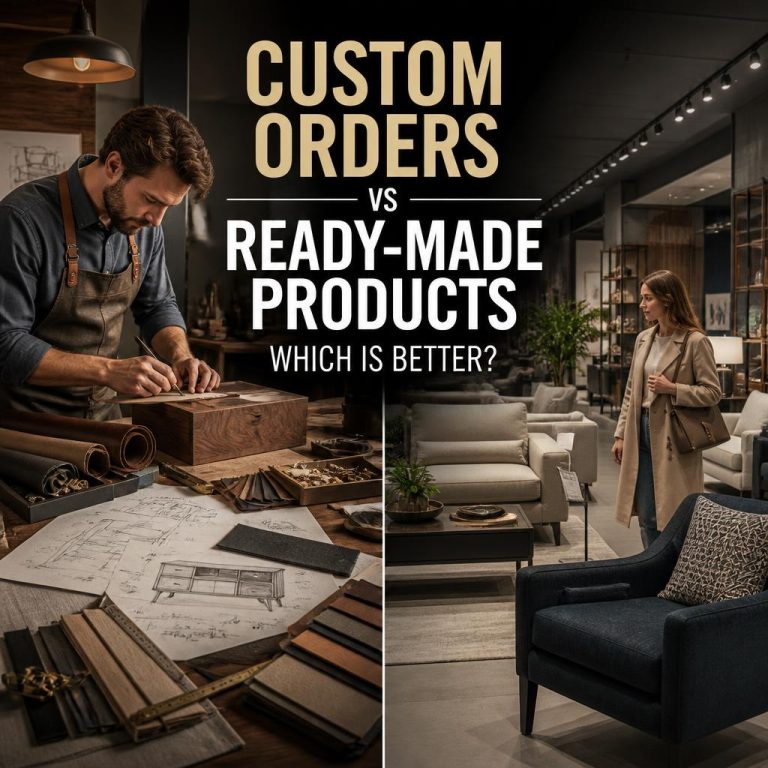
With a custom order, you participate in shaping the final result. With a ready-made product, the manufacturer has already made most of those decisions.
The distinction affects everything from pricing to delivery. Custom manufacturing often requires additional consultation, design work, material sourcing, and labor. Ready-made manufacturing can rely more heavily on economies of scale, where producing large quantities lowers the average cost per unit.
Which Option Offers Better Quality?
There is a common assumption that custom-made automatically means better quality. That is not always true.
Quality depends on materials, workmanship, production standards, and quality control, not simply whether something was customized. A poorly made custom table can be less durable than a well-engineered mass-produced one.
However, custom ordering can give buyers more control over material selection. You might choose solid hardwood instead of engineered board, heavier fabric instead of a thin textile, or a particular type of metal finish.
Look Beyond the Custom Label
Before ordering, ask who makes the product, where production happens, what materials will be used, and how defects are handled.
For ready-made products, customer reviews and existing samples provide useful clues. For customized goods, portfolios, material samples, previous projects, and detailed specifications become particularly important.
Is a Custom Order Worth the Higher Price?
In many cases, customization costs more because the producer cannot spread the design and setup expenses across thousands of identical units.
Still, higher upfront cost does not automatically mean poor value.
Imagine buying a ready-made storage unit that costs less but wastes a large section of available wall space. A custom-built alternative might cost significantly more yet use every available centimeter while meeting your storage requirements for years.
This is where cost-per-use becomes useful. Rather than focusing exclusively on the purchase price, consider how often you will use the product and how long you realistically expect to keep it.
When Paying More Can Make Sense
Spending extra may be reasonable for items that receive frequent use, need exact dimensions, carry emotional significance, or are expected to remain in your home for many years.
On the other hand, paying a premium for something temporary or rarely used may provide little practical benefit.
Ready-Made Products Are Better When Time Matters
Timing can quickly settle the debate.
Suppose you need dining chairs before guests arrive this weekend. Even if custom chairs sound appealing, a four-week production schedule clearly does not match your situation.
Ready-made products are generally better when speed and immediate availability are priorities. You can often purchase them the same day or receive them within a relatively short delivery window.
Custom orders require patience because design approval, production, finishing, inspection, and shipping may happen sequentially.
Customization Gives You More Creative Freedom
This is where custom orders really stand out.
Instead of compromising because an item is “almost right,” customization allows you to specify what you actually want. This could mean matching a particular interior palette, creating unusual dimensions, adding initials to a gift, or choosing materials that complement existing furniture.
From an aesthetic perspective, customization can create stronger visual coherence. Rather than forcing a standard product into an existing environment, you can design the product around that environment.
Personalization Can Add Emotional Value
Not every buying decision is purely practical.
A personalized wedding gift, handmade piece of jewelry, commissioned artwork, or engraved keepsake can carry meaning that a standard product may struggle to replicate.
That emotional connection is difficult to measure in dollars. Sometimes the story behind an item becomes part of its value.
Ready-Made Products Make Comparison Easier
One major advantage of standardized products is transparency.
Because multiple customers purchase the same item, you can often find reviews discussing durability, comfort, sizing, appearance, assembly, and long-term performance. You know more about what you are getting before making a decision.
With custom orders, the exact finished product may never have existed before. Drawings, digital mockups, samples, and photographs can help, but some uncertainty remains until production is complete.
Returns May Also Be Simpler
Many retailers accept eligible ready-made products under their standard return policies. Customized goods are different because sellers may have difficulty reselling something produced specifically for one customer.
Therefore, always review the cancellation, modification, warranty, and return terms before approving a custom order.
How to Decide Between Custom and Ready-Made Products
Start with the purpose of your purchase rather than the product category.
Ask yourself a few practical questions: What do I need? Who will use it? Where will it go? When do I need it? Why would customization improve it? How much am I comfortable spending?
If exact measurements, unusual functionality, personal design, or sentimental meaning are important, custom ordering deserves serious consideration. If affordability, convenience, fast delivery, and easy comparison matter more, ready-made products will often be the smarter option.
Set Your Priorities Before Shopping
A simple priority list can prevent unnecessary spending.
For example, imagine that your priorities are durability first, budget second, delivery speed third, and appearance fourth. A high-quality ready-made product could easily outperform a custom alternative for your situation.
Someone else might rank exact dimensions and visual design above price. For that buyer, customization becomes far more attractive.
Can You Combine Custom and Ready-Made Options?
Absolutely. In fact, a hybrid approach can offer excellent value.
You might buy a ready-made sofa but order custom cushions. A standard desk could be paired with personalized storage. Ready-made clothing can also be altered by a tailor to improve the fit.
This hybrid approach allows you to save money on elements where standardization does not matter while investing in customization where it makes a noticeable difference.
Final Verdict: Custom Orders or Ready-Made Products?
There is no need to treat the decision as an all-or-nothing contest. Custom orders are ideal when individuality, exact specifications, special functionality, or emotional significance matter most. Ready-made products shine when affordability, speed, predictability, and convenience are the priorities.
Before buying, compare more than price. Think about materials, expected lifespan, production time, return conditions, dimensions, and how frequently you will use the item. A cheaper product that needs replacement quickly may cost more in the long run, while an expensive custom item may be unnecessary when a standard alternative already meets every requirement.
Ultimately, Custom Orders vs Ready-Made Products: Which Is Better? has a straightforward answer: the better product is the one that matches your needs, timeline, budget, and expectations without forcing you to pay for features or compromises you do not actually need.
About the Author