Custom Orders Gone Wild: Why Your Weird Requests Get Awesome
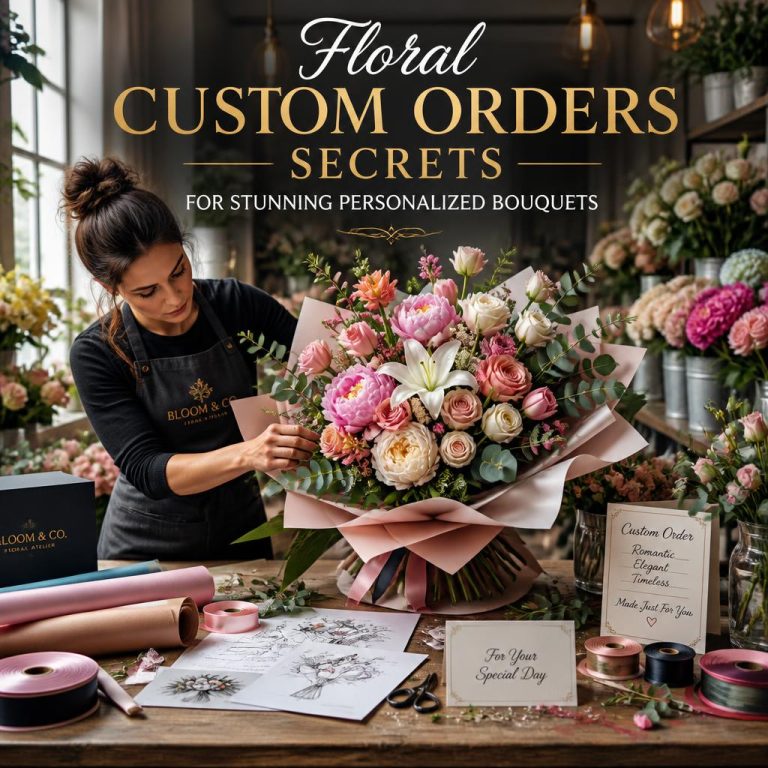
Custom Orders Gone Wild: Why Your Weird Requests Get Awesome is not just a funny idea—it’s basically the reality of modern personalized commerce where people want everything made “just for them,” no matter how unusual it sounds. – lalunafloralstudio
In today’s fast-moving digital marketplace, personalization has become the backbone of how products, services, and experiences are shaped. From handmade crafts to hyper-specific tech builds, custom requests are everywhere, and they’re getting wilder, smarter, and surprisingly more normal every day.
What Are Custom Orders in the Modern World?
Custom orders are products or services created based on specific customer instructions instead of pre-made templates. Think of it as ordering your imagination, then waiting for it to become real.
They can include:
- Personalized clothing designs
- Tailor-made software features
- Custom furniture dimensions
- Even niche digital content creation
The idea is simple: you ask, they build.
Who Actually Requests Custom Orders?
You might think only designers or big companies use custom requests, but that’s outdated thinking.
Everyday Consumers
Regular users want:
- Unique gifts
- Personalized home decor
- Special event items
Businesses and Startups
Companies often request:
- Branding assets
- Custom apps
- Marketing materials tailored to audiences
Creative Professionals
Artists, musicians, and developers use custom work to push boundaries and experiment with innovative design systems and adaptive workflows.
Where Custom Orders Are Most Popular
Custom orders thrive in both digital and physical spaces.
Online Marketplaces
Platforms like Etsy-style stores and freelance hubs make customization easy.
Local Artisan Shops
Small businesses still dominate handcrafted personalization.
Tech Platforms
From AI tools to SaaS dashboards, digital customization is exploding in popularity.
When Did Custom Orders Become a Big Deal?
Customization isn’t new. It actually dates back to ancient tailoring and artisan craftsmanship.
However, the digital boom changed everything. Around the late 2010s, on-demand production systems and automation made it scalable. Suddenly, custom didn’t mean “expensive and rare” anymore—it meant “accessible and fast.”
Why People Love Custom Orders So Much
There’s a psychological reason behind it.
Identity Expression
People want things that reflect who they are.
Emotional Value
Custom items feel more meaningful than mass-produced goods.
Control and Creativity
Customers enjoy being part of the creation process.
In short, it’s not just about owning something—it’s about shaping it.
How Custom Orders Actually Work Behind the Scenes
Most people only see the final product, but the process is surprisingly structured.
Step 1 – Requirement Gathering
Customers describe what they want in detail.
Step 2 – Concept Drafting
Designers or systems create a prototype.
Step 3 – Iteration
Feedback loops refine the product.
Step 4 – Final Delivery
The finished item is delivered or deployed.
Behind it all, technologies like machine learning-based recommendation systems and automated production pipelines often help speed things up.
The Weirdest Custom Orders Ever Seen
This is where things get fun.
Some real-world requests include:
- Shoes designed to match a pet’s fur pattern
- Furniture shaped like favorite video game characters
- Custom keyboards with emotional color themes
- Voice assistants programmed with inside jokes
People don’t hold back—and creators don’t always say no.
The Hidden Business Side of Customization
Here’s where strategy kicks in.
Midway through production ecosystems, Custom Orders become a powerful revenue model for businesses because they increase customer loyalty, reduce competition pressure, and allow premium pricing without heavy marketing.
Companies love them because:
- They increase profit margins
- They reduce inventory waste
- They create long-term brand attachment
It’s not just creativity—it’s smart economics.
Technology Powering Modern Custom Orders
Modern customization relies heavily on advanced systems.
AI Design Tools
Algorithms help generate product variations instantly.
3D Printing
Physical prototypes can be built in hours.
Cloud-Based Collaboration
Clients and creators interact in real-time across continents.
These systems combine computational design with human creativity, forming a hybrid workflow that didn’t exist a decade ago.
Challenges Behind Custom Orders
Not everything is smooth.
Time Complexity
More personalization = longer production cycles.
Cost Variation
Highly detailed work can get expensive.
Communication Gaps
Misunderstandings between clients and creators are common.
Still, most teams adapt by using clearer templates and smarter automation.
Future of Custom Orders in a Digital Economy
The future is heading toward “mass personalization.”
We’re talking about:
- AI-generated personalized products on demand
- Smart factories adjusting production in real time
- Hyper-individualized digital experiences
In scientific terms, it’s a shift toward adaptive production ecosystems where everything adjusts to user behavior instantly.
Why Custom Orders Will Never Disappear
Because humans will never stop wanting uniqueness.
Even if automation gets smarter, the emotional desire for “something made just for me” will always stay relevant. It’s part psychology, part culture, and part creativity.
At the end of the day, custom orders represent more than just buying and selling—they represent collaboration between imagination and execution. Whether it’s a small personal gift or a complex digital system, customization adds meaning to the process.
As industries evolve, one thing stays consistent: people will always want things that feel like they were made just for them, and that’s exactly what keeps the world of Custom Orders alive and endlessly fascinating.
About the Author