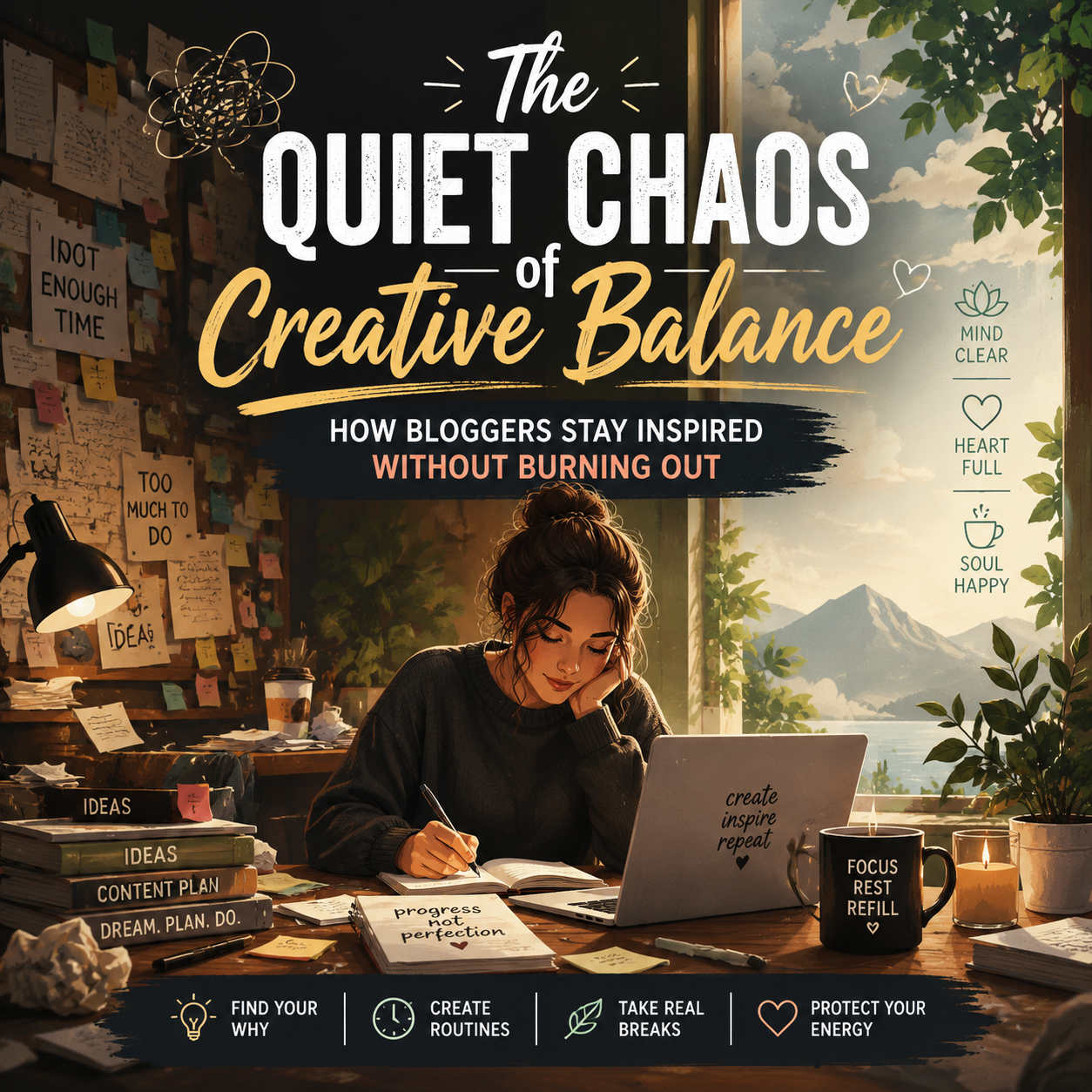
The modern blogging landscape feels louder than ever
The blogging world today moves fast, almost aggressively. New trends appear every week, algorithms shift without warning, and audiences expect constant updates. For many creators, this creates a subtle pressure that sits in the background like noise you can’t switch off. – lalunafloralstudio
What used to be a calm creative space has now become a competitive ecosystem where consistency often feels more important than creativity. That shift is exactly where fatigue starts to creep in.
What real balance looks like for digital creators
Work-life balance in blogging isn’t just about logging off at a certain hour. It’s about managing mental bandwidth, emotional energy, and creative flow without letting one area dominate everything else.
Many assume balance means equal time for work and life. In reality, it’s more fluid. Some days are heavy on writing, others on rest or inspiration gathering. The goal is not symmetry but sustainability.
Why inspiration doesn’t stay constant
Inspiration behaves more like weather than a schedule. It comes and goes depending on mental clarity, environment, and even physical health.
The psychology behind creative waves
Creativity is tied closely to dopamine cycles, which influence motivation and reward systems in the brain. When these cycles are overstimulated by constant content consumption, creators often feel drained instead of inspired.
Cognitive overload in the digital age
Switching between research, writing, editing, and marketing creates cognitive load. When the brain is overloaded, ideas still exist—but accessing them becomes harder. That’s when creative blocks show up unexpectedly.
Building a system that protects your energy
Instead of relying on spontaneous inspiration, successful bloggers often build systems that support consistency.
Content batching and structured planning
Grouping similar tasks—like writing multiple posts in one session—reduces mental switching costs. It also helps maintain flow state longer.
Tools that reduce friction
Simple tools like digital calendars, idea banks, and writing frameworks help remove decision fatigue. The less energy spent on “what next,” the more energy available for actual creation.
Designing a lifestyle that supports creativity
A creator’s environment directly influences output. This includes physical space, digital habits, and even social interactions.
Using the what, who, where, when, why, and how approach makes this clearer:
- What: Your daily routines and work habits
- Who: The people you interact with (audience, peers, clients)
- Where: Your workspace, whether home, café, or co-working space
- When: Your peak productivity hours
- Why: Your motivation behind creating content
- How: The systems and tools you use to execute work
When these elements align, creative flow becomes more natural instead of forced.
Finding alignment between life and content direction
At around the middle of a creator’s journey, something shifts. Strategy becomes just as important as creativity.
Here is where many bloggers start realizing that Inspiration & Blog Work-life balance is not a theory but a daily negotiation between output and recovery. It shapes how content is planned, how breaks are taken, and how ambition is managed without burning out.
Monetization pressure vs mental clarity
Earning from blogging is rewarding, but it introduces another layer of expectation. Suddenly, every post is not just creative work—it becomes a performance metric.
This dual pressure can distort priorities. Writers may start optimizing for clicks instead of meaning, which slowly drains originality. The challenge is maintaining clarity while still growing income streams.
The role of audience and algorithms
Audience feedback is both motivating and exhausting. Positive engagement fuels creativity, but negative comments or low reach can quickly reduce confidence.
Algorithms add another layer of unpredictability. They reward consistency but not always quality in a predictable way. This inconsistency forces creators to adapt constantly, sometimes at the cost of authenticity.
Daily habits that protect creative balance
Sustainable creators often share similar routines, even if their niches differ.
Morning clarity rituals
Some start the day with journaling or reading instead of jumping straight into content creation. This helps stabilize attention before work begins.
Deep work sessions
Uninterrupted writing blocks—usually 60 to 120 minutes—allow ideas to develop fully without distraction.
Intentional rest periods
Rest is not treated as reward but as part of the workflow. Without it, creativity becomes mechanical.
Common traps that drain creativity
Many bloggers fall into patterns that slowly reduce output quality:
- Overconsumption of competitor content
- Posting without strategic direction
- Ignoring physical health
- Constantly chasing trends
- Working without structured breaks
Each of these may seem harmless individually, but together they create long-term fatigue.
The evolving future of blogging balance
Content creation is shifting toward slower, more intentional production. Audiences are beginning to value depth over frequency. This opens the door for creators to work in a more balanced rhythm.
The future favors bloggers who can maintain consistency without sacrificing mental well-being. It’s no longer about producing the most content—it’s about producing sustainable content.
Recommended reads for deeper exploration
Closing perspective on sustainable creativity
Balance in blogging is not a fixed destination but a continuous adjustment between ambition and recovery. Some weeks feel productive, others feel slow, and both are part of the same cycle.
When creators learn to respect that rhythm, pressure becomes manageable and inspiration returns more naturally. In the end, long-term success depends less on intensity and more on sustainability. That is the core idea behind The Quiet Chaos of Creative Balance: How Bloggers Stay Inspired Without Burning Out.
About the Author